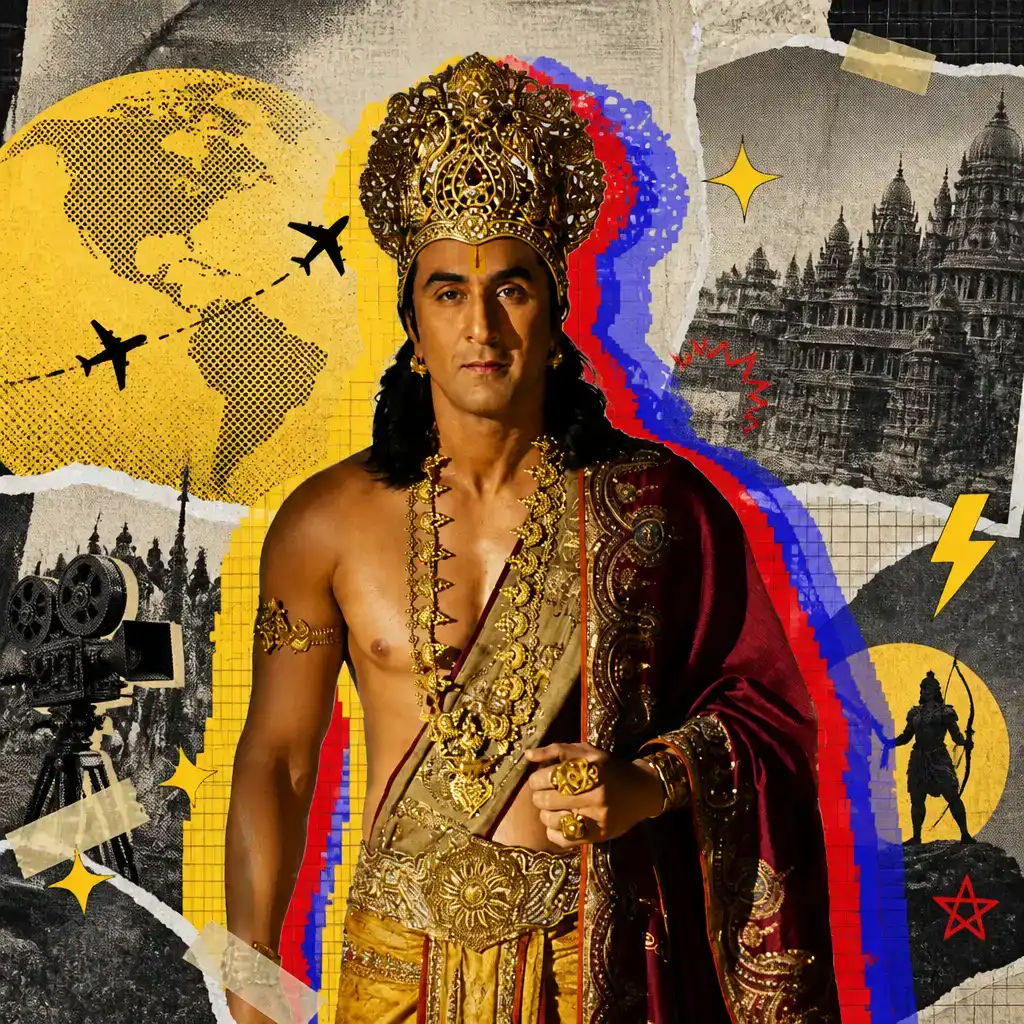
The source material follows Rama through years of exile and the abduction of Sita by Ravana. It is one of humanity’s oldest surviving epics, which gives the filmmakers an enormous cultural legacy to respect alongside the demands of modern blockbuster filmmaking.
“For generations, the Ramayana has inspired people through its timeless humanity and enduring values,” Malhotra said when Sony’s involvement was announced. “Our ambition has always been to honor that legacy while creating a cinematic experience worthy of audiences everywhere.”
How big is the production?
The film has been shot for IMAX, and the names behind the camera signal that Prime Focus Studios is not thinking small. Oscar winners Hans Zimmer and A.R. Rahman are providing the music, pairing two globally recognized composers on the same mythological saga.
Terry Notary and Guy Norris are overseeing action choreography. Ramsey Avery and Ravi Bansal lead the production design, with the team tasked with building a world familiar to generations of readers and viewers without making it feel like a museum display.
Indian Express has reported a combined budget of ₹4,000 crore for both installments. If accurate, that figure would place the project among the most expensive bets in Indian cinema and make the international release strategy central to recouping its costs.
Malhotra also founded visual effects company DNEG, whose credits include Denis Villeneuve’s Dune films and Christopher Nolan projects such as Interstellar, Tenet and The Odyssey. That background gives the production serious technical credentials, although the early footage has still faced close inspection online.
Why has the visual effects debate become part of the story?
Some trailer reactions described the imagery as artificial, plastic or suggestive of AI-generated visuals, according to India Today. Ranbir Kapoor pushed back, arguing that audiences had become “CGI critics” while assessing cinema-scale work on their phones.
Filmmaker Rishab Shetty offered a warmer verdict, praising the team for creating an “incredibly convincing world.” The split response is hardly surprising. A story this culturally significant comes with viewers who already carry strong ideas about how its characters, landscapes and battles should look.
The IMAX presentation may become part of the answer. The filmmakers clearly want the finished work judged on a large screen, not compressed into a social media clip between celebrity posts and snack videos. Still, a reported investment of this size leaves little room for visual effects that audiences consider unfinished.
Who is distributing Ramayana in India?
Sony holds worldwide rights outside India, but descriptions of the domestic arrangement have varied. The Hollywood Reporter initially said Prime Focus Studios would handle the Indian release. TheWrap identified Dharma Distribution as the distributor.
Prime Focus Studios has offered a more specific version, saying Dharma Productions will distribute the film in North India’s Hindi-speaking markets. Indian Express previously reported a ₹250 crore agreement granting Dharma distribution across India. With those accounts not fully aligned, the precise regional division of rights remains unclear.
What is settled is the scale of the commercial ambition. The film arrives months after Christopher Nolan’s The Odyssey, another screen adaptation of a foundational epic, reportedly crossed $1.55 billion worldwide. That performance does not guarantee an audience for another ancient tale, but it does show that very old stories can still produce very modern box-office numbers.
For Sony, Prime Focus Studios and the cast, November will test whether that appetite extends to an Indian mythological saga released as a multilingual, two-film global event. Rama’s journey may be timeless. The box-office expectations are extremely current.