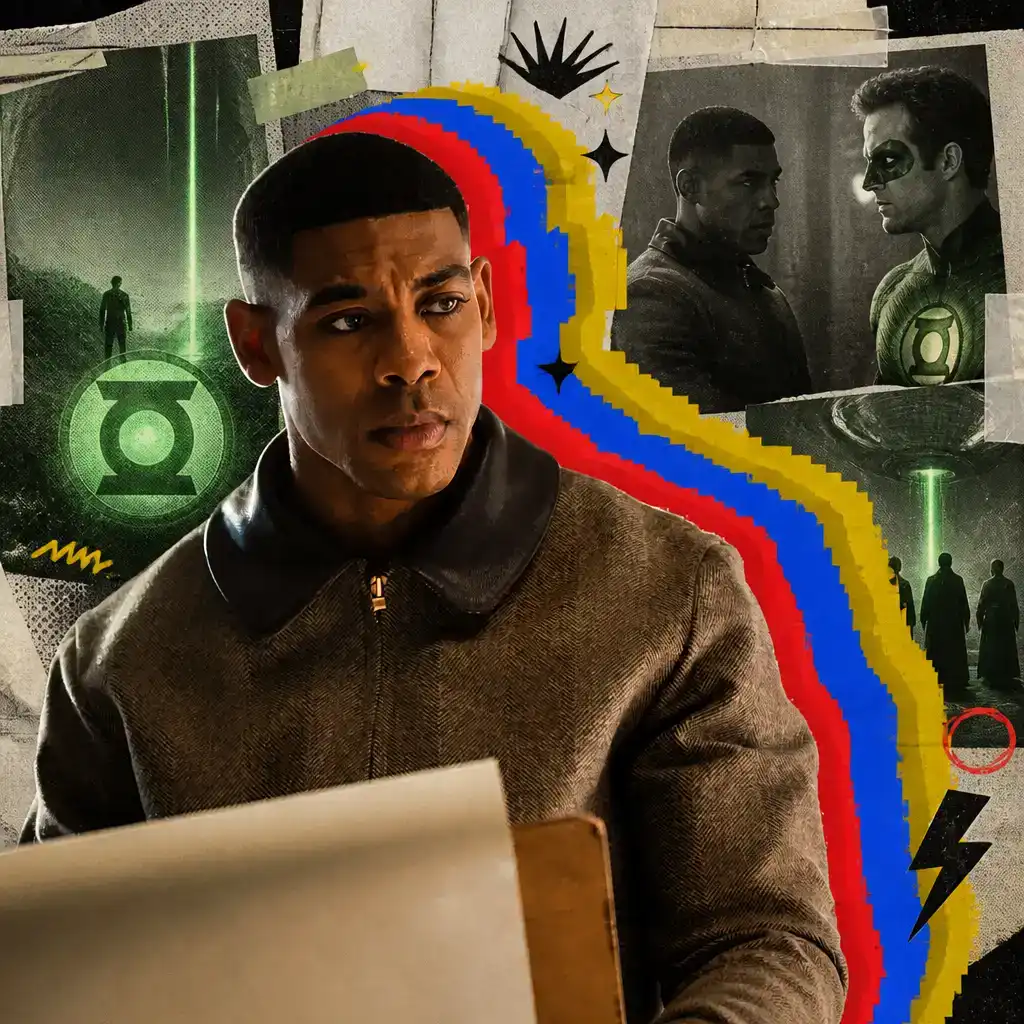
DC introduced John in Green Lantern #87 in 1971. Architecture belonged to his earliest characterization, while his military history arrived later. His famously intricate, solid constructs also reflect the exacting mind of someone trained to design and build.
“OutKast,” however, creates an extensive new family history. John Sr., played by J. Alphonse Nicholson, was once tested by a ring but failed because fear for his family held him back. The Guardians then allowed John’s parents to raise their infant son as a future candidate, effectively turning childhood into one very long recruitment program.
Tom King served as the writers’ room authority on which comic-book traits had to remain. Kelly said King and Damon Lindelof helped the team distinguish essential canon from material open to reinvention. The result is recognizably John Stewart, but with a childhood that comics readers have never seen before.
Why was John trained from infancy?
After John Sr. loses his opportunity, Bernadette Stewart, played by Jasmine Cephas Jones, takes control of her son’s preparation. She treats the Guardians’ test as a system that can be studied, corrected and eventually defeated. John Sr. worries their child may grow up to hate them, but both parents believe the conditioning could deliver him a life beyond the limits they faced.
Kelly compared the family dynamic in the writers’ room to King Richard, particularly the difficult question of how children later understand parents who imposed extraordinary discipline in pursuit of extraordinary success. She did not want the script to issue a simple verdict on Bernadette and John Sr.
“Even if my son hates me for doing what I’ve done to him, he will grow up to have a different outcome than I will,” Kelly said of the parents’ reasoning.
That choice gives the episode its sharpest new angle. The Guardians are not merely selecting heroes. They are influencing generations, outsourcing the emotional cost of their recruitment methods to one family and returning years later to assess the result.
John’s eventual decision to attend art school also complicates the experiment. He becomes suitable for the ring not by suppressing every personal desire, but by reclaiming the creative identity his training tried to subordinate.
What do the birds really mean?
Throughout John’s childhood, his parents tell him birds are monitoring his behavior for the Guardians. Bernadette later admits this was a lie, but the effect never leaves him. Every bird becomes a reminder that he must remain controlled, observant and perfect, even when no authority figure appears to be present.
Kelly compared the idea to telling a child that a supernatural figure is always watching. Hal and the other Lanterns were free to develop without that constant imagined surveillance. John learned to treat every moment like an evaluation.
The payoff came one episode earlier, when John maintained a bird construct through sheer force of concentration, even while incapacitated. Hal’s reaction showed that the feat was exceptional. “OutKast” reveals the psychological machinery behind it.
According to Kelly, the lie trained John’s subconscious to continue working when his conscious mind could not. “He is able to keep in the back of his subconscious that there is a job to do,” she said.
It is an impressive superpower with a sizeable emotional invoice. John’s precision was not produced by a pleasant mentorship program. It came from growing up convinced that failure was always being recorded.
Why does Bernadette challenge the Guardians?
The kitchen confrontation between Bernadette and Laura Linney’s unnamed Guardian exposes a major flaw in the selection process. Asking whether someone feels fear does not mean the same thing for every candidate, particularly when race, environment and lived experience shape what danger looks like.
Kelly said Green Lanterns do not need to be free from fear. They need the will to overcome it. Bernadette’s argument is that the Guardians fail to understand that distinction because they know too little about the people they test.
“You’re actually not picking the bravest people,” Kelly summarized. “You’re picking the people dumb enough to not be scared.”
The Guardian does not dismiss her. Instead, the exchange suggests that Bernadette’s criticism changes how the extraterrestrial organization thinks about Earth and its candidates.
The New York Times read the episode as commentary on systemic and unconscious racism, while Den of Geek connected the scene to the socially conscious tradition of the Green Lantern/Green Arrow comics. Yet the script leaves room for dispute. Forbes contributor Paul Tassi argued that Bernadette’s belief about racial privilege is her interpretation, not a confirmed explanation for Hal’s selection, since John Sr. explicitly failed a fear-based test. Another Forbes critic, Erik Kain, found the rules confusing.
That ambiguity appears intentional, even if it will not satisfy every viewer. The Guardians may consider their process neutral. The Stewart family lives with its consequences.
How did Hal Jordan derail John’s military career?
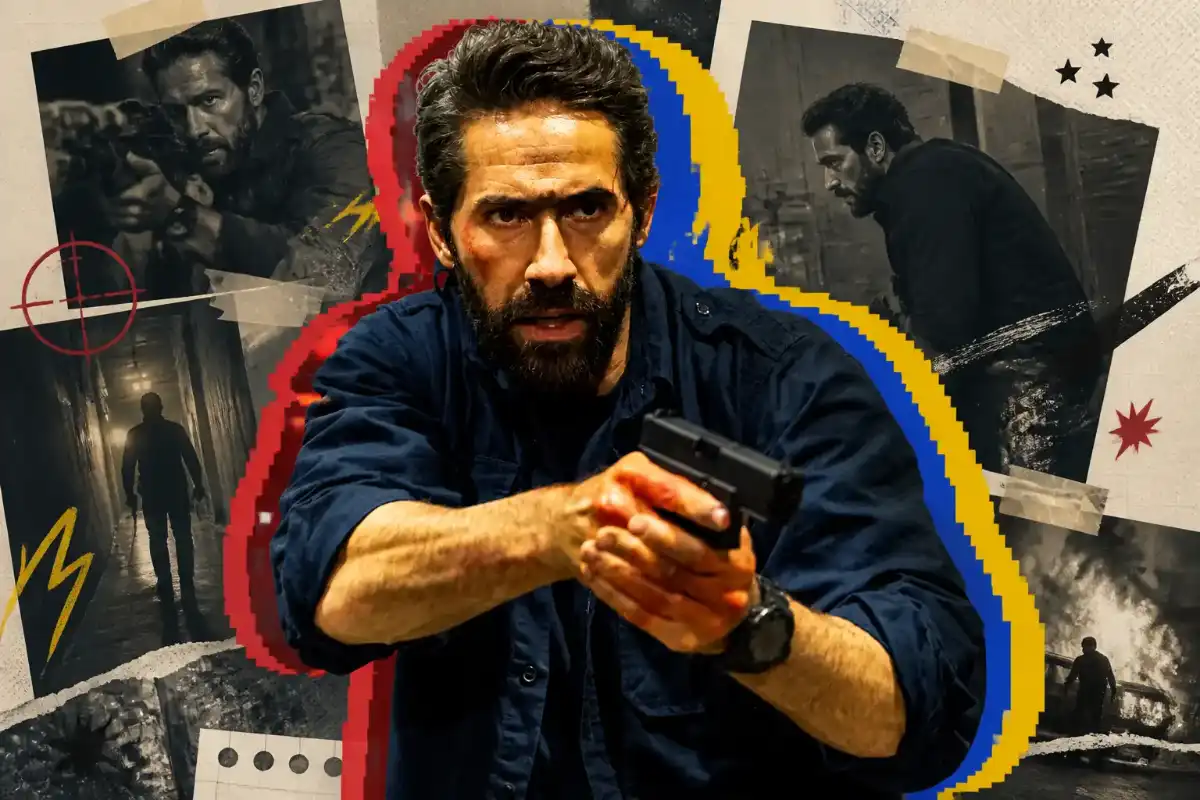
The Gray Wolf mission transforms an inherited grievance into John’s personal one. As a Marine sniper, John is wounded, abandoned and positioned to complete a defining operation. Hal intervenes and takes the achievement, leaving the government in need of someone to blame. John receives a dishonorable discharge.
For him, the incident confirms the pattern established before he could remember it. His father followed the rules and lost the ring. John sacrificed friendships, freedom and an ordinary upbringing to ensure nobody could take his own chance. Hal still arrived first.
Kelly described John’s anger as broader than resentment toward one man. Hal becomes the visible target for frustration with his parents, the Guardians and every institution that demanded perfection from John while apparently allowing Hal to operate with far fewer constraints.
The bedroom scene with Bernadette marks the first time John openly directs that fury at Hal. His mother, already familiar with disappointment, gives him his art-school acceptance letter and urges him to live rather than wait indefinitely for the Guardians to keep their promise.
This is also why the flashbacks matter to the present-day investigation. John and Hal are not partners with a minor personality clash. They are carrying different versions of the same history, and neither version encourages trust.
Why structure the episode as an interview?
The episode moves among John’s childhood, military service, art education and Guardian interview rather than presenting his life in a straight line. Kelly said the team knew the backstory needed to be shown, not delivered through a large block of exposition, but covering roughly 30 years required a strong framework.
The interview provides that structure. Beneath the Guardian’s questions sits one decisive concern: Is John willing to replace Hal Jordan?
The sniper storyline became the dramatic link among the different periods. It demonstrates John’s skill, explains his hostility toward Hal and shows how childhood conditioning follows him into adulthood. Once that element was established, Kelly, Damon Lindelof and showrunner Chris Mundy could align the episode’s three timelines around the same emotional conflict.
The interview takes place in an abandoned mall, specifically an old Foot Locker. The location was chosen for practical story logic. People might pass through the surrounding area to skateboard or teach someone to drive, but few would investigate a private meeting in a vacant store. It is mundane enough to avoid attention and strange enough to suit a cosmic job interview.
HBO and DC also released an official podcast with Pierre, Kelly and director Stephen Williams discussing how the chapter was assembled. Pierre said he approaches Green Lanterns as relatable people, hoping viewers can imagine themselves joining the Corps rather than seeing its members as remote cosmic figures.
What does the ending set up in Rushville?
John completes the interview expecting to share the news with his parents, only to find Hal already at their home. The driveway conversation quickly loses any professional polish. Hal tells John he does not need a sidekick or a backup.
From Hal’s perspective, John has just been identified as his greatest threat. From John’s perspective, the man who displaced his father and damaged his military career is once again standing between him and the position he was trained to inherit.
That tension will return directly to the Rushville mystery. The pair must cooperate during a 48-hour mission in which failure could erase an entire city, yet the episode has just supplied both men with excellent reasons to distrust each other.
Kelly described the coming dynamic as a hostile variation on a romantic comedy: “How do they fall in love when they actually don’t like each other?” The love in question is partnership rather than romance, but the structural joke fits. Two stubborn leads are trapped together by circumstances, except this disagreement comes with power rings and potential mass destruction.
Critical reaction has been sharply divided. Den of Geek called the episode “truly great,” while GamesRadar felt it over-explained John’s character. Processed Media graded it C+, criticizing repetition and presentation. What nobody disputes is the scale of the rewrite. John Stewart now enters Rushville not merely as Hal Jordan’s trainee, but as the final product of a decades-long Guardian experiment.
New episodes of Lanterns premiere Sundays on HBO and HBO Max. Episode 4 had not aired as of September 1, leaving Rushville, and this extremely tense partnership, waiting for its next move.