Nerd Initiative critic Robet Stroud described the story as a debate over the “line in the sand” between rescue and fascism. AIPT’s Jonathan Waugh called it a “simmering subplot” about Wally trying to do too much. Readers have also compared the premise to Minority Report, an obvious match for a story about stopping predicted crimes.
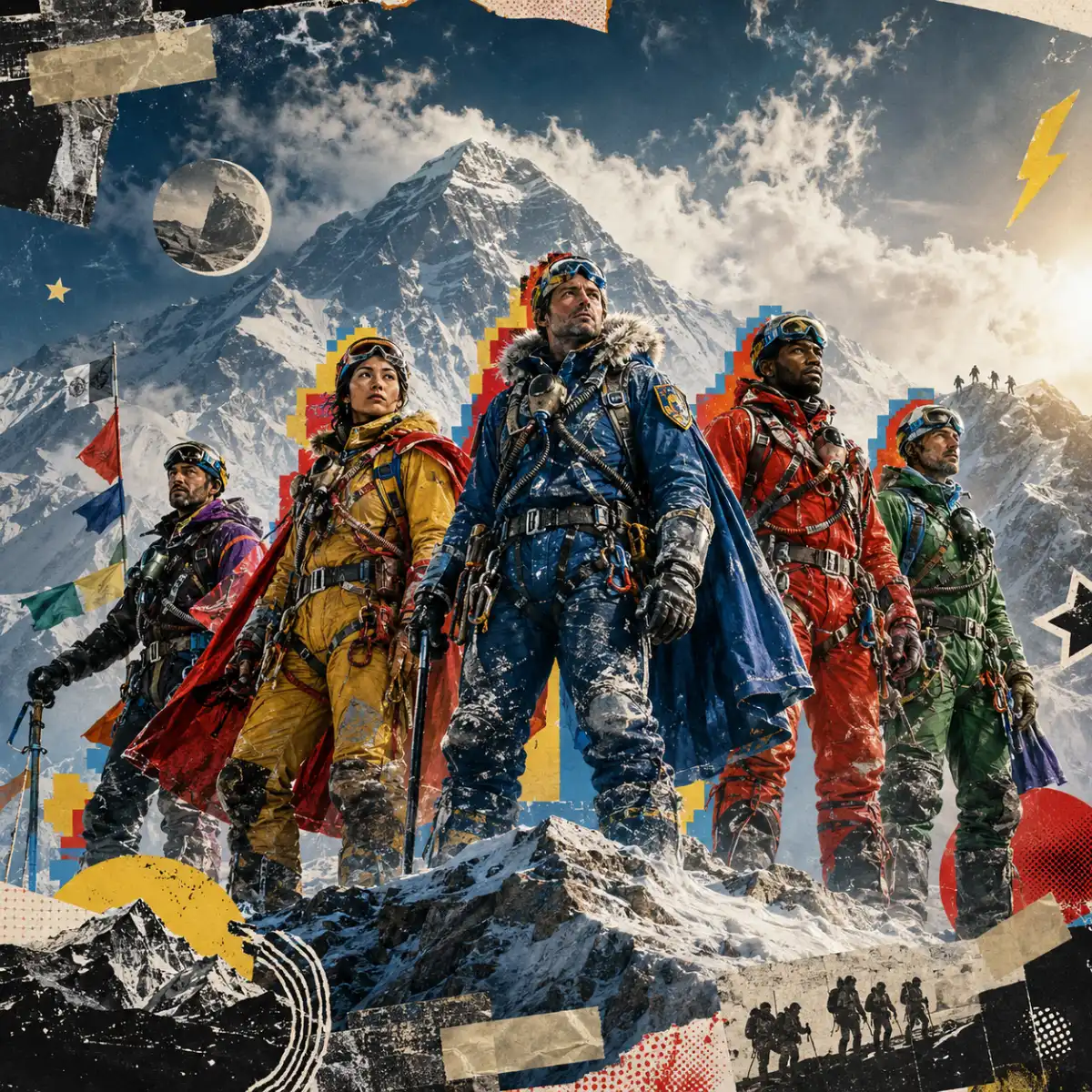
Oliver responds by calling a meeting on Mount Everest, a location Wally is unlikely to stumble across during one of his global sprints. Subtle? Not especially. Strategically sensible? Very.
Green Arrow brings brains and precision
Green Arrow, Oliver Queen
Oliver is the organizer and apparent field leader. He has no metahuman abilities, but he is an elite athlete, tactician and marksman with specialized arrows, advanced equipment and a billionaire’s resources.
Batman has acknowledged that Green Arrow surpasses him in some physical categories, including aim, reaction time and grip strength, which he said “borders on the superhuman.” Oliver will need every advantage when dealing with someone who can cross a city before most people finish blinking.
Sean Izaakse’s variant cover for The Flash #39 depicts Green Arrow fighting Wally directly, suggesting the disagreement will not remain a polite ethics seminar.
Red Tornado, John Smith
Red Tornado is an advanced android capable of generating powerful winds and transforming into a living whirlwind. He has also coordinated the Justice League’s expanded membership in recent comics.
His computerized mind may be as important as his weather control. Matching Flash physically is difficult, but processing Wally’s movements and identifying patterns could give the team a fighting chance.
DC’s biggest powerhouses join the intervention
Aquaman, Arthur Curry
Aquaman may be the most dangerous member of this roster. He already possesses immense strength and durability, but Emperor Aquaman elevated him into the Avatar of the Blue, granting him extraordinary command over water.
Arthur has defeated Poseidon, converted a water-covered planet into steam and then frozen it into what the comic called “a torrent of razors and ice.” He has also demonstrated control over the water in an opponent’s blood, an ability that could stop even a speedster without requiring a footrace.
The Flash #36 appears to take place during the Batman: Bad Seeds event, placing Arthur near the height of those powers.
Superman, Jon Kent
Jon Kent, the son of Clark Kent and Lois Lane, brings the familiar Kryptonian package: superstrength, superspeed, flight, heat vision and enhanced senses. His personal variations include directing his heat vision along curved paths, detonating it like a grenade and transforming into an electrical energy form.
Jon is not as fast as Wally, but he can reshape a battlefield quickly. Freezing, melting or destroying the surface beneath Flash could matter more than trying to catch him in a straight chase.
Wonder Woman, Diana Prince
Wonder Woman combines demigod-level strength and durability with centuries of combat expertise and the Lasso of Truth. Her raw speed does not make her the roster’s clearest counter to Wally, but her tactical judgment gives the group something equally useful.
Diana may also be the teammate best equipped to persuade him. With both sides claiming they are protecting innocent people, this conflict needs someone who can separate good intentions from dangerous methods.
Martian Manhunter, J’onn J’onzz
Martian Manhunter remains one of DC’s most versatile heroes. His abilities include superstrength, telepathy, shapeshifting, intangibility, flight and heat vision.
Superman has identified J’onn as one of the heroes he would least want to fight. Against Flash, telepathy may be the crucial advantage. Wally can outrun almost any physical attack, but escaping a mental one is another matter.
Wally’s predictions are already breaking down
The upcoming issues add a reliability problem to the civil-liberties dispute. Wally’s system is intrusive when it works. If it produces contradictory or incomplete visions, the case for using it becomes even harder to defend.
The Flash #37, scheduled for September 23, expands Wally’s future sight before the visions begin contradicting one another. That development suggests his information overload may not produce one clean, dependable version of events.
The consequences escalate in The Flash #38, due October 28. Three bridges across America are destroyed despite Wally’s surveillance. The solicitation does not establish why his predictions fail, but the disaster exposes the central weakness in his approach: monitoring more people does not guarantee that he will identify every genuine threat.
That gap also gives the mystery villain room to operate. Wally has built a system around seeing danger early, yet someone appears capable of slipping past it or manipulating what he sees.
When Flash and the League finally collide
The confrontation becomes explicit in The Flash #39, scheduled for November 25. DC’s solicitation says, “The Justice League wants the Flash to stop fighting crimes that haven’t happened yet.” Wally refuses because he believes the method saves lives, while the League moves to shut it down.
The issue is also billed as an interactive story in which readers help make key choices for Wally. A new villain will be revealed, adding another complication just as the heroes’ philosophical dispute becomes a physical showdown.
DC’s solicitations do not confirm that issues #37 through #39 are one uninterrupted sequence of team battles. Instead, the escalation is more measured:
- The Flash #37 introduces contradictory visions.
- The Flash #38 brings the destruction of three bridges and growing League opposition.
- The Flash #39 explicitly delivers the League-versus-Flash confrontation and reveals a new villain.
The Justice League first came together in 1960 to defeat Starro, with figures such as Batman, Superman, Wonder Woman, Aquaman, Green Lantern and Flash defining its classic image. This new lineup has a very different mission. It is not protecting Wally from an outside enemy. It is deciding whether one of DC’s greatest heroes has become too powerful, too invasive and perhaps too confident in a future that refuses to behave.