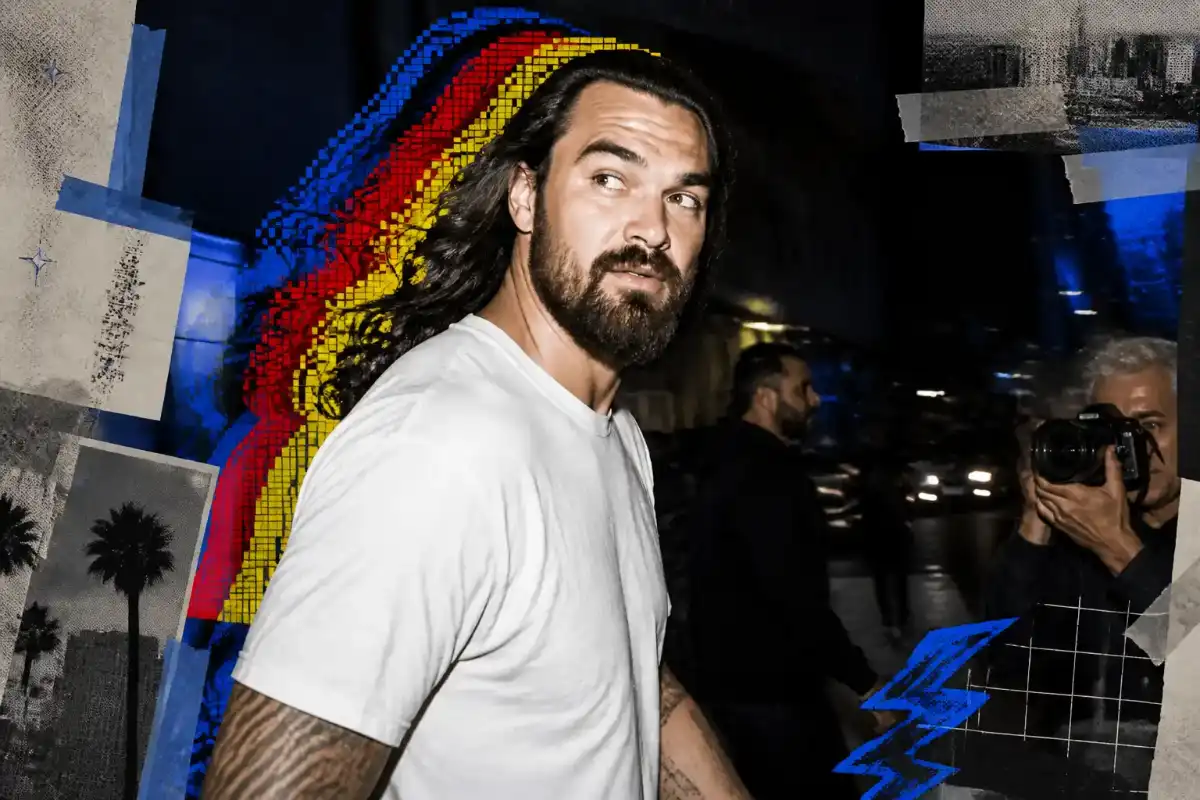
The production followed Musk through his Washington period, DOGE’s cuts and the expanding political significance of companies such as SpaceX and Starlink. According to the Associated Press, Gibney interviewed hundreds of people, both on and off the record. Several prominent participants appear on screen:
- Musk’s former wife Justine Musk
- Ashley St. Clair, who says Musk fathered her child
- Tesla co-founder Martin Eberhard
- Journalists Kara Swisher and Zoë Schiffer
- Artificial intelligence researcher Geoffrey Hinton
Musk declined to participate. When the project was announced in March 2023, he called it a “hit piece” before seeing it. Gibney replied, “How would you know?” The exchange later escalated into insults on X, but the director continued seeking sources rather than a social-media rematch.
What Gibney says Musk is really selling
The film’s central thesis goes beyond familiar complaints about missed deadlines, inflated promises or chaotic management. Gibney argues that Musk built his influence by selling an image of extraordinary technical mastery, then used that reputation to accumulate control over infrastructure, communications and data.
“Musk isn’t an inventor. He’s a confidence man,” Gibney told the Associated Press, describing how his view changed during production. The documentary revisits disputes over credit at Tesla, claims surrounding full self-driving technology, animal testing at Neuralink and Musk’s habit of tying corporate ambitions to grand visions of Mars and humanity’s future.
Those allegations are presented through interviews, published reporting and archival material. The film also examines Musk’s treatment of employees, partners and women in his life. Ashley St. Clair discusses alleged pressure involving nondisclosure agreements and paternity arrangements, while Musk’s father, Errol Musk, recounts a disturbing childhood episode in which a family friend died during a road trip.
Gibney’s portrait is deliberately severe, and some viewers may find its conclusions too sweeping. Yet producer Nick Shumaker argues that the accumulation is the point. Rather than another stream of disconnected headlines, the documentary assembles Musk’s business, media and political activity into one extended study of how reputation becomes authority.
DOGE and federal data become the sharpest issue
The most consequential section concerns Musk’s time in Washington. The documentary looks at DOGE’s workforce reductions, cuts to foreign aid and access to federal computer systems. Former United States Agency for International Development administrator Samantha Power anchors the film’s account of the human cost associated with dismantling aid programs.
Gibney also raises a more explosive question: what happened to the federal data DOGE personnel could access? He says a source who managed information technology at a major agency, along with whistleblower accounts and public reporting, indicated that DOGE staff received “Super Admin” privileges. Such access, he argues, could have made copying sensitive information technically simple.
The film does not establish that Musk or DOGE transferred federal data to SpaceX or used it for campaigning. Instead, it warns that the access created that possibility. A complaint from the Social Security Administration’s chief data officer separately raised concerns about DOGE’s handling of government information.
Wired editor-in-chief Katie Drummond asks what artificial intelligence could do with federal records covering millions of Americans. Geoffrey Hinton goes further, suggesting that detailed citizen data could provide an unfair electoral advantage if used to influence voters. His comments frame the issue as a warning rather than proof of an existing operation.
That distinction matters. The documentary is making a case about concentrated access and inadequate oversight, not presenting verified evidence that election systems were altered.
Starlink pushes private power into public policy
Gibney’s broader concern is that Musk’s companies now perform functions governments cannot easily replace. SpaceX has become central to the United States space program, while Starlink provides communications infrastructure in Ukraine and other conflict zones. Decisions made by one private owner can therefore carry diplomatic and military consequences.
The film also examines Musk’s relationships with political leaders, including India’s Narendra Modi and Argentina’s Javier Milei, and asks whether ownership of X gives him unusual leverage in business negotiations. In Gibney’s account, the danger lies less in any single company than in the combination of launch systems, satellites, artificial intelligence, social media and government access.
Ashley St. Clair adds one of the documentary’s strangest election-season stories. She says Musk showed unusual confidence before the 2024 result and told her he would unleash an “anomaly in the matrix.” A displayed text has him declaring, “I have ten thousand lasers in space.”
Asked whether he meant Starlink, St. Clair says she does not know where else he would have space lasers. Gibney leaves the moment unresolved. It could be trolling, boasting or something more serious, but the film offers no evidence that Starlink manipulated vote counts. The sequence instead illustrates the uncertainty surrounding a man whose jokes, products and political influence increasingly occupy the same room.
A digital Musk appears when the real one will not
Without an interview from its subject, the production built a substitute. Gibney’s team collected publicly available Musk audio and created a video-game avatar that delivers his own words. Other sequences place the character inside a retro shooter, complete with health bars, extra lives and colorful respawns.
It is a risky choice in a documentary climate already anxious about deepfakes and synthetic performers. Gibney says the device grew from Musk’s repeated fascination with simulation theory and the possibility that reality functions like a game. The avatar turns that worldview back on him, presenting the billionaire as both player and character.
The director does not use artificial dialogue. The animated figure speaks from existing recordings, allowing the film to play with form while keeping Musk’s words intact. For Gibney, the technique also punctures the aura surrounding his subject. The documentary’s visual argument is that concentrated power looks less mystical once the machinery becomes visible.
That playful streak continues over the closing credits. David Byrne wrote and performs the original song “Let Me Sell You a Dream” with composer Daniel Pemberton. Byrne assembled the lyrics from Musk’s own “wild statements,” saying he did not need to add editorial commentary. The song will be submitted for consideration at the 2027 Academy Awards.
Hollywood helped construct the Musk persona
The documentary also tracks how entertainment polished Musk’s public image long before his turn into electoral politics. Cameos and guest appearances repeatedly cast him as a benevolent super-inventor, often with minimal distance between the real executive and the fantasy around him.
His brief appearance in Iron Man 2 encouraged comparisons with Tony Stark. The Simpsons called him “possibly the greatest living inventor,” while The Big Bang Theory placed him in a Thanksgiving soup kitchen helping people in need. Rick and Morty introduced the alternate-universe “Elon Tusk,” complete with a family-friendly wink.
In 2021, Saturday Night Live gave Musk an entire hosting showcase. He discussed Mars, promoted Dogecoin and addressed his self-reported Asperger’s syndrome, while some cast members publicly objected to his booking.
Gibney treats these appearances as more than celebrity curiosities. They helped establish a cultural shortcut: Musk as the eccentric genius who might be difficult but must know what he is doing. The filmmaker argues that this mythology softened public scrutiny at the exact moment Musk’s companies were becoming essential to transportation, spaceflight and communications.
Walter Isaacson’s bestselling 2023 biography reinforced interest in Musk but drew criticism from reviewers who wanted a tougher assessment. Gibney’s film arrives as the unapologetically prosecutorial counterweight.
The legal review is almost a production of its own
Taking on a famously combative billionaire brings predictable legal tension. Musk has sued advertisers that boycotted X and has pursued litigation against artificial intelligence rival Sam Altman. Gibney, HBO and the producers therefore assembled prominent lawyers to test the documentary’s reporting and language before release.
TIFF programmer Thom Powers said the film was undergoing scrutiny from leading attorneys. Gibney also relies heavily on previously published journalism from outlets including Wired and The Wall Street Journal, giving the documentary a substantial reporting foundation.
Source protection created another challenge. Gibney told the Associated Press that even some Musk admirers seemed frightened to speak on camera. The production compensated by interviewing people off the record and using those conversations to guide further research, while reserving the screen for participants prepared to be identified.
The film is insured, but legal preparation cannot prevent someone from filing a lawsuit. It can only make the work more defensible. Gibney has been through comparable battles before with films about Enron, Scientology, Theranos, Vladimir Putin, the Catholic Church and the United States military. His 2007 film Taxi to the Dark Side won the Academy Award for best documentary feature.
At 72, he describes Musk as a distillation of that career rather than its conclusion. Few subjects could offer a larger concentration of money, technology, celebrity and institutional dependence.
A complicated group of companies is backing it
The project brings together Jigsaw Productions, Closer Media, Anonymous Content and Double Agent, with Black Bear handling worldwide sales. Producers include Ronan Farrow and Lawrence Wright. HBO acquired United States television and streaming rights in 2023, while Universal took foreign distribution rights. Bleecker Street will release the film in American theaters.
Those arrangements carry their own boardroom intrigue. Black Bear is led by Teddy Schwarzman, whose father, Blackstone founder Stephen Schwarzman, has moved in political circles with Musk and has publicly praised him. Teddy Schwarzman did not take a personal producing credit.
HBO’s corporate future adds another question. Warner Bros. Discovery has been run by David Zaslav, who has socialized publicly with Musk. A planned ownership change could place David Ellison over HBO before the documentary’s expected streaming debut in the first half of 2027. Ellison’s father, Larry Ellison, appears critically in the film through messages discussing a possible $2 billion contribution toward Musk’s Twitter purchase.
No one has announced changes to the film or its release. The filmmakers also retained paid video-on-demand rights, an unusual safeguard if corporate relationships become uncomfortable. In this production, even the distribution chart has subplots.
Venice launches an unusually long Oscar campaign
The film’s major Venice presentation is scheduled for September 8, with accredited screenings beginning September 7 and additional public showings on September 9. Toronto will follow. Published runtimes vary slightly: Venice lists 225 minutes plus a 10-minute intermission, Variety reports 232 minutes, and other materials describe a three-hour, 45-minute cut.
A longer four-hour version is planned for HBO in 2027. Before that, the October 16 theatrical opening gives Bleecker Street an awards-qualifying release and positions the documentary for the 2027 Oscars. Byrne and Pemberton’s closing song adds another potential category alongside best documentary feature.
The running time could repel casual viewers, but Bleecker Street chief executive Kent Sanderson believes urgency can turn the movie into a communal event. Musk influences social media, electric vehicles, space launches, satellite communications, artificial intelligence and Republican politics. That gives audiences plenty to debate during the intermission.
The largest unknown remains Musk’s response. He may attack it on X, challenge specific claims or decide that extended outrage would provide free publicity. Scientology once bought a full-page newspaper advertisement disputing Gibney’s Going Clear, only to help drive attention toward the film.
Gibney is betting that audiences will sit through nearly four hours because the subject already touches their lives. The documentary does not promise a neutral biography. It offers a warning about what happens when celebrity mythology, private infrastructure and political access become difficult to separate.