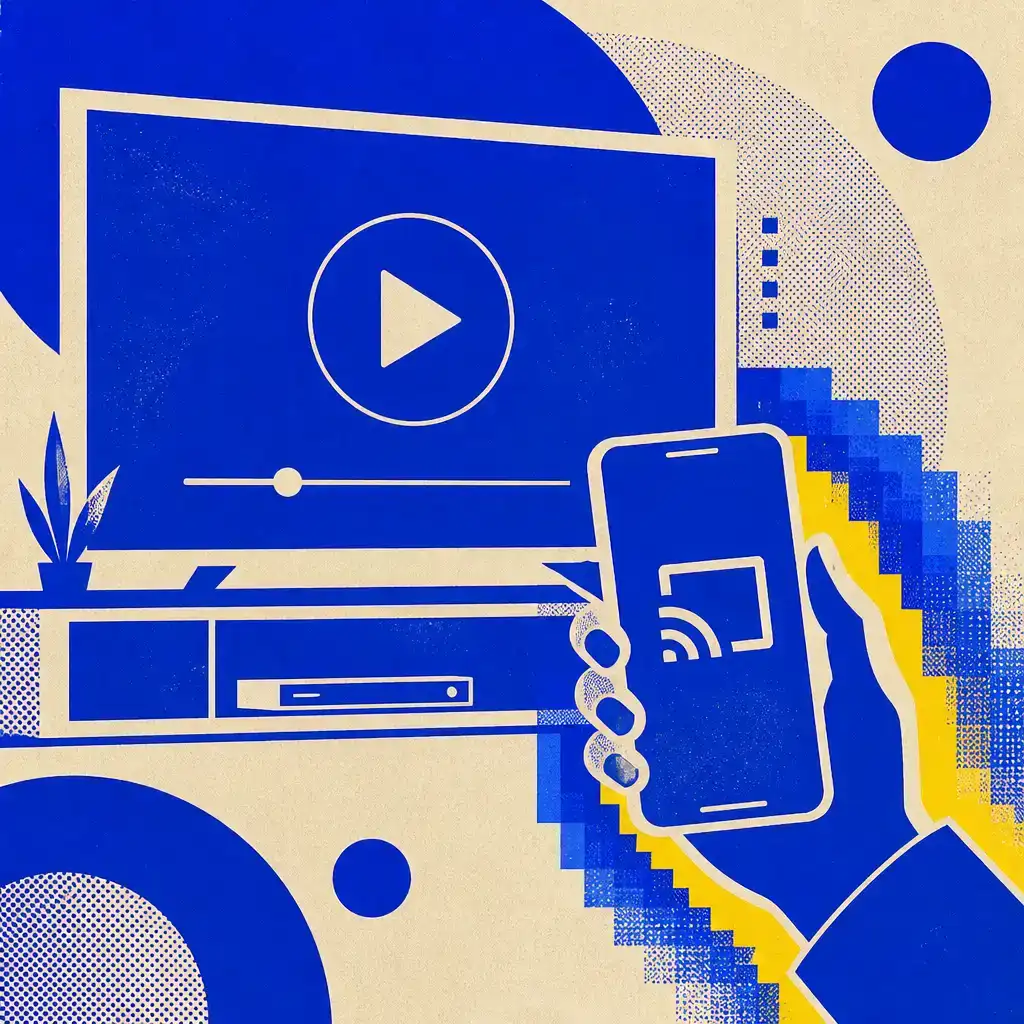
YouTube TV casting is getting a serious convenience boost, but there is one technical catch hiding behind the glossy announcement. YouTube now lets a phone interact with a television through the same Google account, even when the devices are using different internet connections. Traditional casting, however, generally still requires both screens to share a Wi-Fi network.
That distinction matters. The new setup is less about sending a video directly from one device to another and more about synchronizing a phone with an active TV session. It may look like casting from the sofa, but the account is doing the backstage work.
How does YouTube’s new TV connection work?
TeamYouTube announced the broader rollout on September 1 after testing the feature earlier in 2026, according to 9to5Google and Android Authority. Once the same Google account is signed in on both devices, the YouTube mobile app can detect the television session and offer a Play on different device option.
Ava Biswas of iGeeksBlog tested the system with a television connected to Wi-Fi and a phone running on mobile data. The phone remained linked to the TV experience without interrupting playback, confirming that a shared local network is no longer essential for the companion connection.
From the phone, viewers can:
- Transfer playback between screens
- Browse videos, search and watch Shorts without stopping the TV video
- Manage the television queue
- Like videos, leave comments and subscribe to channels
- Open links shared by creators
- Use the phone as an on-screen remote
TeamYouTube representative Dave called the release a “huge upgrade.” The phrase has some corporate sparkle, but avoiding a frantic Wi-Fi check every time the remote disappears under a cushion is genuinely useful.
Does regular casting still need the same Wi-Fi?
Usually, yes. YouTube’s support documentation separates conventional casting from its account-based companion mode. The standard Cast process generally expects the phone and TV to be connected to the same Wi-Fi network.
If they are on separate networks, viewers have two alternatives. They can use the new companion experience while signed into the same Google account, or pair the devices using a TV code. That makes the update broader than ordinary casting without completely replacing the old system.
YouTube also promises that browsing, searching or watching Shorts on the phone will not disrupt the video already playing on the television. Early coverage suggested this could mean playing two different videos simultaneously, but the official documentation does not explicitly guarantee separate concurrent playback. The confirmed benefit is that phone activity no longer hijacks the TV session.
This should also prevent one familiar annoyance: closing or swiping away the mobile app will not necessarily bring television viewing to an abrupt and deeply unpopular finale.
Why is YouTube investing so heavily in television?
The audience numbers explain the attention. YouTube Chief Executive Officer Neal Mohan said in 2025 that viewers were watching more than 1 billion hours of YouTube on televisions every day. He also said TV had become the platform’s primary viewing device in the United States.
Nielsen measured YouTube at 13.4% of all U.S. television watch time in July 2025, ahead of Disney at 9.4%. That puts the video platform firmly in competition with traditional broadcasters, streaming services and entertainment companies, not merely other phone apps.
The second-screen idea itself is not new. YouTube introduced an earlier phone-and-TV companion experience in 2022, when television viewing on the service averaged more than 700 million hours per day. The latest rollout removes more of the connection friction and gives the phone a larger role as a controller, comment screen and potential shopping tool.
Mohan has specifically identified purchases as a goal for second-screen interaction. Creator links, subscriptions and other engagement tools can now sit conveniently on the phone while the main video keeps the biggest screen in the house occupied.
What should viewers know about shared televisions?
Account-based synchronization makes setup easier, but it also puts more importance on which Google account remains signed in. On a shared television, that account can influence recommendations, watch history and access to the companion controls. Anyone using a hotel, rental property or communal TV should remember to sign out when finished.
Early reaction has not been universally celebratory. Some Reddit users reported repeated reconnection requests, changes to playlist-session behavior and autoplay continuing despite being disabled. Biswas, by contrast, found that switching networks did not interrupt TV playback. The mixed reports suggest the rollout may still have a few technical wrinkles as it reaches more devices and accounts.
The television upgrade arrives during a wider period of experimentation at YouTube. Late-August reports described changes to how views are counted on long-form videos, while the company has also tested prompt-based feeds designed to give users more control over homepage recommendations.
For now, the headline feature is simple: the phone and TV can cooperate without sharing Wi-Fi, provided the account setup is right. The Cast icon has not retired, but it now has a more flexible companion waiting nearby.